
Sea cargo reference
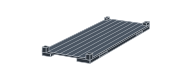
20' Platform
Nothing but the load bed. The figures below are the inside of the box, the door, and the weights.
- Internal length
- 6.058 m
- Internal width
- 2.438 m
- Internal height
- 0.370 m
- Door opening, width
- Does not apply
- Door opening, height
- Does not apply
- Cubic capacity
- Does not apply
- Empty weight
- 2520 kg
- Payload
- 27960 kg
The figures below are the outside ISO footprint and the height of the deck. A platform has no inside to measure.
How a 20' Platform is used
A bare load bed that fills the outside footprint of a twenty-foot container, with no walls, no ends and no roof.
With nothing above the deck there is no height limit, and cargo may overhang on every side. That makes it the most open unit for a piece that is genuinely out of gauge.
The figure shown as internal height is the deck itself. Cargo is lashed straight to the platform. The shipment normally moves under an approved stowage plan, with out-of-gauge charges applied.
Cargo it suits
How the box is made
- A bare load bed: steel decking over a heavy longitudinal underframe, with no walls, ends or roof.
- Corner castings in the ISO positions are what still make it a container, rather than a plain flat bed.
- Lashing points run the full length of both side rails.
- A steel frame with a wooden floor and no walls at the sides or ends. That is what lets a very heavy weight sit on a small area.
- Lashing rings sit in the side rails, rated to 3,000 kg.
Why shippers choose it
- Nothing stands above the deck, so there is no height limit, and cargo may overhang on every side.
- This is the most open unit for a piece that is genuinely out of gauge.
- Loading is clear from above and from all four sides.
Check these before you book
- Cargo has no protection at all and takes the full weather and sea spray.
- The shipment normally needs an approved stowage and lashing plan, and out-of-gauge charges apply.