
Reference
LD-9 Reefer
Insulated container built on a P1P base. The IATA code, rate class, weights, volume and aircraft fit are below.
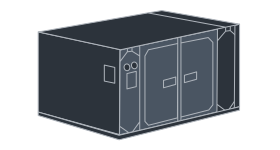
- IATA code
- RAP cool container on P1P base
- Rate class
- Type 5
- Door size
- 216 x 147 cm (85 x 58 in)
- Aircraft it fits
- 747, 767, 777, 787, DC-10, MD-11 lower hold
- Max gross weight
- Lower hold 4,626 kg (10,198 lb); main deck 6,000 kg (13,227 lb)
- Empty weight
- 400 kg (882 lb)
- Inside volume
- 9.6 m³ (339 ft³)
How the LD-9 Reefer is used
The refrigerated LD-9: an insulated cool container on a P1P base, built to the RAP code with a solid door.
It carries the same two gross ratings as the dry LD-9: 4,626 kg in a lower hold and 6,000 kg on a main deck. Inside volume is quoted at 9.6 m³ once the insulation is counted, against 10.8 m³ for the dry unit.
Cargo it usually takes
How this family is arranged
- An insulated cool container on a P1P base.
- The door is solid, because the insulated shell needs a seal.
- Insulated panel walls, usually with a foam core, sit on a standard container base.
- A solid door with a sealing gasket takes the place of the canvas curtain used on dry units.
- Active units carry their own refrigeration, on battery or aircraft power. Passive units hold temperature with stored coolant.
- Temperature is watched throughout. On an active unit the controller shows the setpoint next to the actual temperature.
Why operators pick it
- It holds a temperature band for the whole journey, including the ramp and the wait on the ground, which is where an unprotected cold chain usually fails.
- It uses the same aircraft positions and the same handling gear as the matching dry unit.
- It is the usual choice for pharmaceuticals, vaccines and high-value perishables, where a temperature spike ruins the cargo.
Settle these points before you book
- Insulation and machinery both take inside volume compared with the dry unit.
- Empty weight is much higher, so the paying payload is lower.
- An active unit needs power or a charge on the ground, and pre-cooling before the cargo goes in.