
Sea cargo reference
General Cargo
A multipurpose hull for mixed parcels. The notes below cover the cargo, the way the hull is arranged, and the limit that puts a ship in this class.
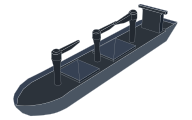
- Ship's gear
- Almost always geared
- How capacity is counted
- Deadweight tonnes, plus bale and grain hold capacity
- Usual size
- Commonly 5,000-30,000 DWT
- Cargo type
- Mixed parcels, break-bulk and unitised
General cargo ships
This is the ship for cargo that does not fit a bulker, a tanker or a box ship. Bags, steel, timber, machinery, project pieces and containers often share one voyage.
The mark of the type is the tween deck: a movable deck that splits the hold so light cargo can sit above heavy cargo without being crushed. Holds are often box-shaped, so containers stow cleanly next to loose cargo.
The ship's own cranes let it work where the port has little or no gear. That is why the type still carries trade into smaller and developing ports after boxes took the main lanes.
Cargo on board
How the hull is arranged
- The holds are divided, so one consignment stays physically apart from the next. That matters when fragile or higher-risk cargo travels with other goods.
- The build is deliberately tough, so the ship can keep working in ports with little infrastructure.
- Several decks. Tween decks can be raised or lowered so the hold height suits the cargo.
- Hatches are large, and the ship almost always carries its own cranes or derricks.
- Tank tops are strengthened and lashing points run through the holds, because each piece is secured on its own.
- Holds can be shaped to take boxes as well as loose and palletised cargo.
Why this trade uses it
- One voyage can mix bags, pallets, steel, timber, project pieces and containers.
- Ship's gear means the call does not depend on shore cranes, which matters at smaller and developing ports.
- It is the workable ship for a parcel too small for a bulker and a poor fit for a box.
Settle these points before you fix
- Each piece is worked on its own, so loading and discharge are slower than bulk or container work.
- How well the cargo is stowed and lashed depends on the planners and the stevedores.
- Time in port and the cost of handling take a much larger share of the voyage.