
Sea cargo reference
Livestock
Pens on several ventilated decks. The notes below cover the cargo, the way the hull is arranged, and the limit that puts a ship in this class.
- Ship's gear
- Ramps and internal handling systems
- How capacity is counted
- Head of livestock carried
- Usual size
- From a few thousand to over 20,000 head
- Cargo type
- Live animals
Livestock carriers
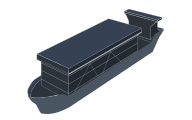
These ships carry live animals in pens on several decks, mainly cattle and sheep on long routes.
Ventilation dominates the design, because a full ship produces a great deal of heat and moisture. Fresh water production, feed storage, waste handling and veterinary space all have to be sized for the voyage and for the number of animals on board.
The trade is tightly regulated and closely watched. Stocking density, ventilation rates, mortality reporting and the attendants on board are all subject to rules from the exporting country and the importing country.
Cargo on board
How the hull is arranged
- Feeding runs on automatic systems with a manual backup, and animals are inspected by a vet before loading.
- The trade follows international standards that the authorities at both ends of the voyage enforce.
- Hull and gear are drawn around one cargo, not around general trade.
- The handling fit matches the trade: heavy-lift derricks, stern or side ramps, ventilation, or a refrigeration plant.
- The structure is strengthened where that cargo needs it, for point loads, vehicle decks, or several tween decks.
Why this trade uses it
- Takes cargo a general ship cannot carry safely or at a workable cost.
- Built-in gear keeps port time short where the shore has little equipment.
- For many of these trades it is the only practical ship.
Settle these points before you fix
- The trade is narrow, so ships are scarce and the rate is less competitive than open-market tonnage.
- The return voyage is often in ballast, because the special fit has nothing to load home.
- Many of these trades add their own rules on top of ordinary cargo law.