
Sea cargo reference
Refrigerated
A whole hold held at a set temperature. The notes below cover the cargo, the way the hull is arranged, and the limit that puts a ship in this class.
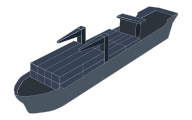
- Ship's gear
- Usually geared, with side doors on some designs
- How capacity is counted
- Hold volume in cubic feet or cubic metres
- Usual size
- Commonly 100,000-650,000 cubic feet
- Cargo type
- Perishable cargo
Refrigerated ships
On a reefer ship the holds themselves are insulated and refrigerated. That is different from a container ship carrying boxes that each have their own cooling unit.
Several decks split the space into modest compartments, each with its own temperature, so different commodities can share a voyage. Cooled air is pushed through the stow, not only around it.
This used to be the main way to move fruit, meat and fish. Most of that trade has moved to reefer containers, which need no special terminal and can continue inland. Dedicated reefer ships remain on high-volume seasonal routes, especially bananas and citrus.
Cargo on board
How the hull is arranged
- Climate control is automatic. The system holds the chosen temperature and watches it for the whole voyage.
- Hull and gear are drawn around one cargo, not around general trade.
- The handling fit matches the trade: heavy-lift derricks, stern or side ramps, ventilation, or a refrigeration plant.
- The structure is strengthened where that cargo needs it, for point loads, vehicle decks, or several tween decks.
Why this trade uses it
- Takes cargo a general ship cannot carry safely or at a workable cost.
- Built-in gear keeps port time short where the shore has little equipment.
- For many of these trades it is the only practical ship.
Settle these points before you fix
- The trade is narrow, so ships are scarce and the rate is less competitive than open-market tonnage.
- The return voyage is often in ballast, because the special fit has nothing to load home.
- Many of these trades add their own rules on top of ordinary cargo law.