
Reference
Boeing 737-300F
Earlier 737 conversion on the same feeder job. Payload, hold, door and the job it usually flies are below.
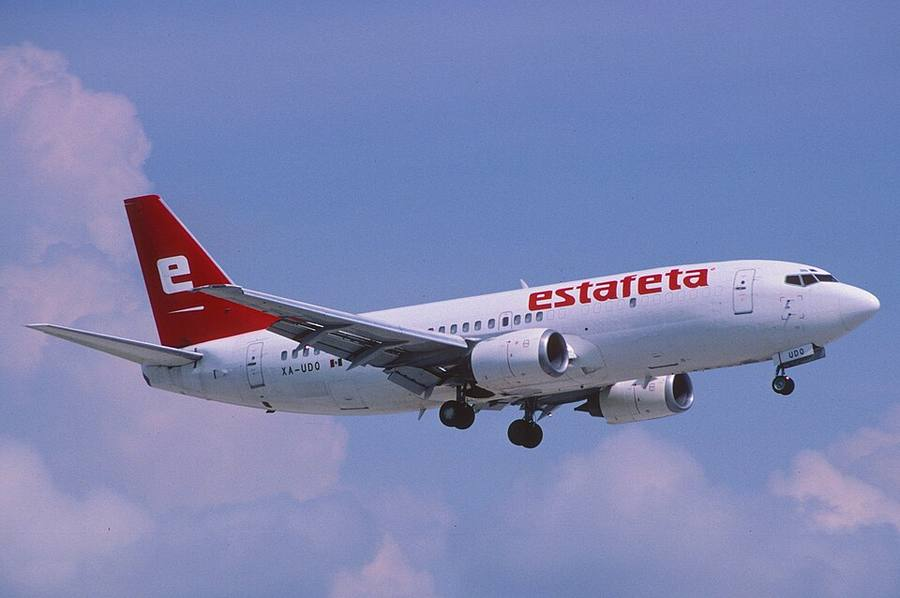
- Structural payload
- 19,460 kg
- Hold volume
- 130 m³
- Hold length × width × height
- 23.24 × 3.17 × 2.14 m
- Main cargo door
- 3.48 × 2.16 m
How the Boeing 737-300F is used
An earlier 737 conversion, still flying regional feeder and express networks.
Payload sits a little under the -400F, on a shorter fuselage. Both do the same job: moving freight between secondary airports and the hubs where widebody freighters load.
Cargo it usually takes
How this family is arranged
- A passenger airframe converted for freight: cabin removed, floor strengthened, and a large cargo door cut into the forward left side.
- A rigid 9g barrier sits just behind the flight deck, so a shifting load does not reach the crew.
- The powered floor is sized for narrower single-aisle pallets and containers, not full widebody ULDs.
- Windows are plugged and cabin systems come out, which cuts weight and simplifies the shell.
Why operators pick it
- It pays on short and medium sectors where a widebody would leave half the deck empty.
- It uses many more airports, including ones with no widebody handling.
- Converting an existing airframe costs a fraction of a new freighter, which is why this segment keeps growing.
- Several flights a day suit express and e-commerce better than one large departure.
Settle these points before you book
- Payload and volume are a fraction of a widebody, so a large shipment needs several rotations.
- The main deck takes narrowbody ULDs, not the full-size pallets used on widebody aircraft.
- Range is short. An intercontinental trip needs a fuel stop or a different aircraft.