
Reference
Mil Mi-26
Heaviest-lifting helicopter still in service. Payload, hold, door and the job it usually flies are below.
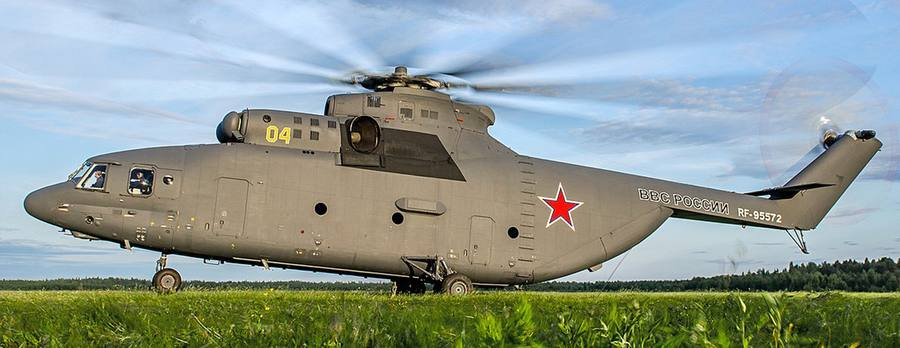
- Structural payload
- 20,000 kg
- Hold volume
- 110 m³
- Hold length × width × height
- 12.00 × 3.20 × 3.10 m
- Main cargo door
- 2.90 × 3.20 m
How the Mil Mi-26 is used
The heaviest-lifting helicopter in service. It carries twenty tonnes in the cabin or under the fuselage on a sling.
It exists for loads that must reach a site with no runway and no road: drilling modules, transformers, bridge sections, recovered aircraft. The cabin is large enough for vehicles. The sling takes what will not fit inside.
Cargo it usually takes
How this family is arranged
- The cabin has rear clamshell doors or a ramp. A sling hook under the fuselage takes loads that will not fit inside.
- Tie-down rings in the floor are rated for the cabin payload. The heavy types also carry an internal winch.
- No runway is required. The load goes to a prepared spot, a pad, or a bare clearing.
Why operators pick it
- It reaches sites with no airstrip, which is the reason to use one.
- A sling carries pieces too large for any cabin and sets them onto a foundation or structure.
- Typical work is power-line construction, drilling support, mountain and offshore lifts, and disaster relief.
Settle these points before you book
- Payload and range are small next to any fixed-wing freighter, and both drop quickly with altitude and temperature.
- Cost per tonne-kilometre is the highest in air cargo.
- Weather limits are tighter. A sling job needs clear ground and trained crews at both ends.