
Reference
Kamov Ka-32
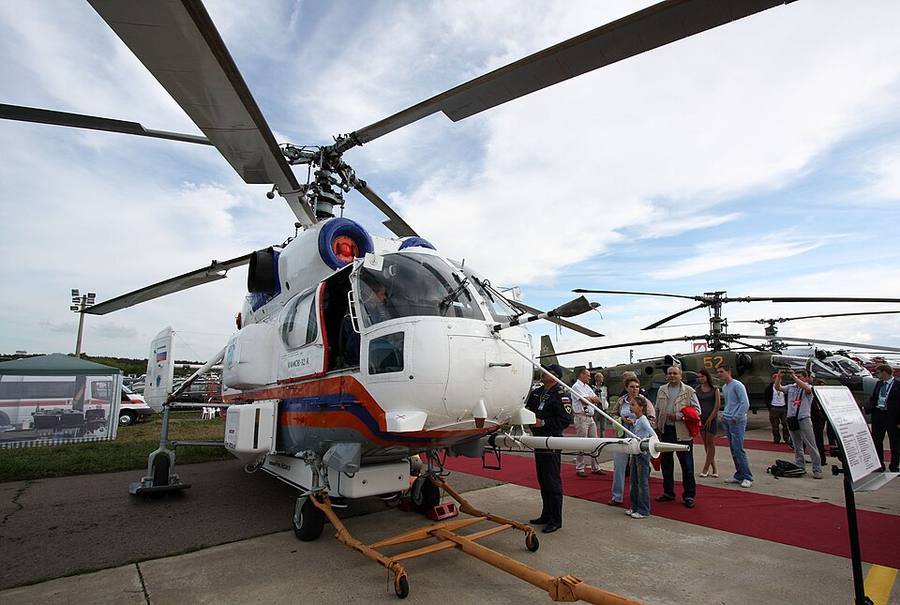
Coaxial rotors for lifts in a tight space. Payload, hold, door and the job it usually flies are below.
- Structural payload
- 3,700 kg (5,000 kg slung)
- Hold volume
- 4 m³
- Hold length × width × height
- 3.68 × 1.27 × 1.20 m
- Main cargo door
- 1.60 × 1.09 m
How the Kamov Ka-32 is used
A coaxial-rotor helicopter with no tail rotor. That layout makes it unusually stable and compact for a precise lift.
The small footprint and the control in confined spaces suit construction, power-line, logging and firefighting work where a conventional helicopter would struggle.
Cargo it usually takes
How this family is arranged
- The cabin has rear clamshell doors or a ramp. A sling hook under the fuselage takes loads that will not fit inside.
- Tie-down rings in the floor are rated for the cabin payload. The heavy types also carry an internal winch.
- No runway is required. The load goes to a prepared spot, a pad, or a bare clearing.
Why operators pick it
- It reaches sites with no airstrip, which is the reason to use one.
- A sling carries pieces too large for any cabin and sets them onto a foundation or structure.
- Typical work is power-line construction, drilling support, mountain and offshore lifts, and disaster relief.
Settle these points before you book
- Payload and range are small next to any fixed-wing freighter, and both drop quickly with altitude and temperature.
- Cost per tonne-kilometre is the highest in air cargo.
- Weather limits are tighter. A sling job needs clear ground and trained crews at both ends.