
Reference
Mil Mi-8
General-purpose helicopter for sites with no strip. Payload, hold, door and the job it usually flies are below.
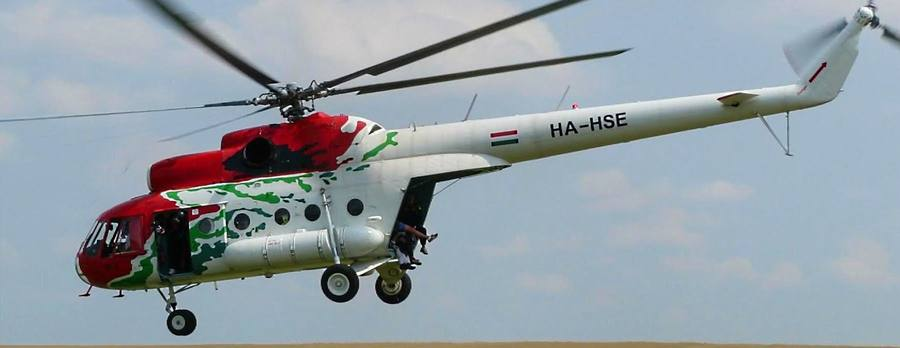
- Structural payload
- 4,000 kg
- Hold volume
- 23 m³
- Hold length × width × height
- 5.34 × 2.30 × 1.80 m
- Main cargo door
- 2.34 × 1.82 m
How the Mil Mi-8 is used
One of the most widely built helicopters, and a standard machine for moving crews and supplies where there is no airstrip.
Four tonnes goes in the cabin through the rear clamshell doors, or underneath on a sling. Survey, construction, pipeline and utility work are more typical than pure freight.
Cargo it usually takes
How this family is arranged
- The cabin has rear clamshell doors or a ramp. A sling hook under the fuselage takes loads that will not fit inside.
- Tie-down rings in the floor are rated for the cabin payload. The heavy types also carry an internal winch.
- No runway is required. The load goes to a prepared spot, a pad, or a bare clearing.
Why operators pick it
- It reaches sites with no airstrip, which is the reason to use one.
- A sling carries pieces too large for any cabin and sets them onto a foundation or structure.
- Typical work is power-line construction, drilling support, mountain and offshore lifts, and disaster relief.
Settle these points before you book
- Payload and range are small next to any fixed-wing freighter, and both drop quickly with altitude and temperature.
- Cost per tonne-kilometre is the highest in air cargo.
- Weather limits are tighter. A sling job needs clear ground and trained crews at both ends.